
Being In Bastrop Now
"Never be so focused on what you're looking for that you overlook the thing you actually find." -Ann Patchett ('State of Wonder')
Darby and I moved to the Lost Pines in Bastrop, Texas, four and a half years ago. Coming from Austin and Portland before it, the adjustment to small-town Texas took a minute. People in Bastrop sometimes say, “Don’t Austin our Bastrop,” and they mean it. They want it their way, and they want newcomers to take that Austin stuff down the highway from whence it came. The thing is, the highway runs the other way, from Austin’s exploding population to the outlying areas.
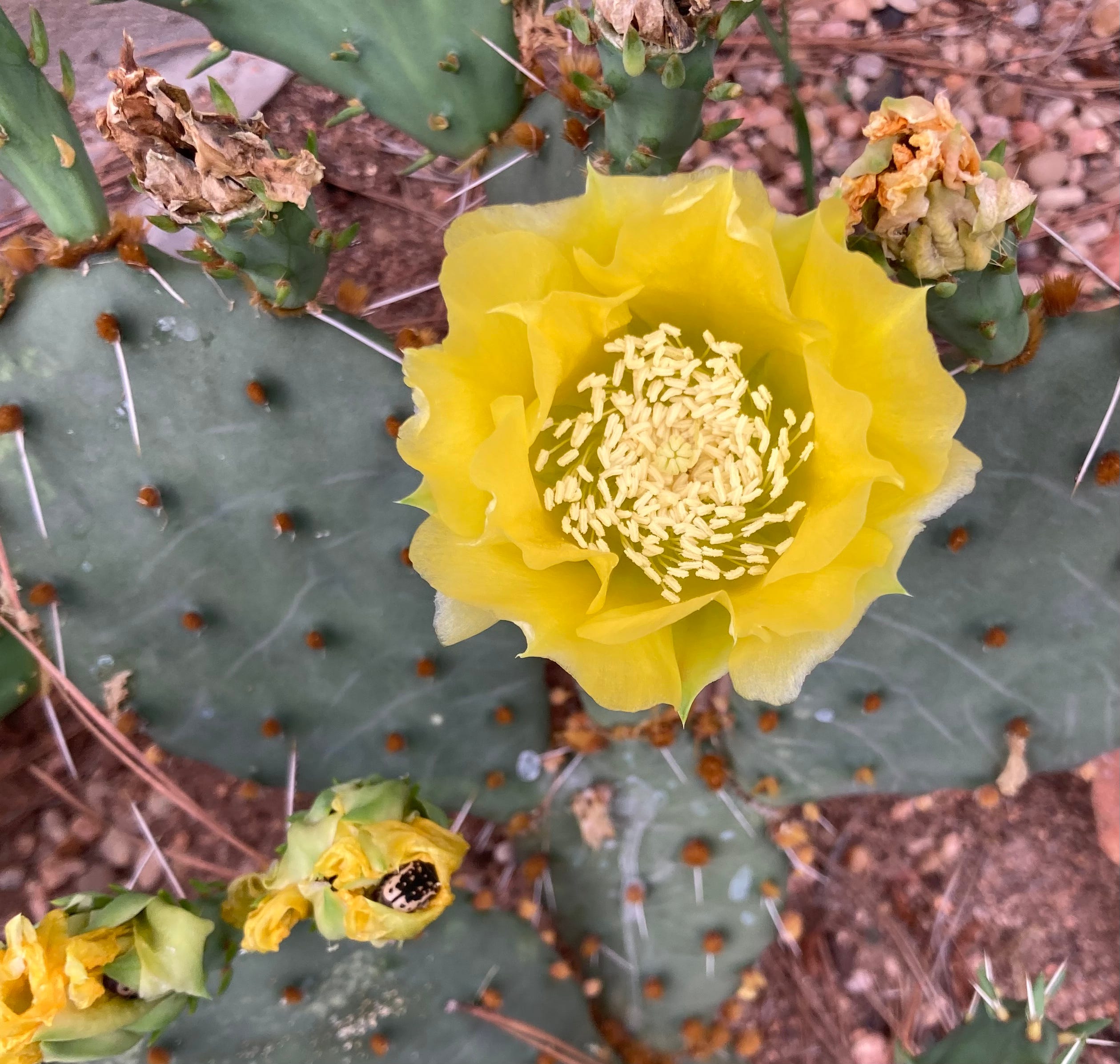
As the growth of the metro continues to reach Bastrop, there’s no dimming the capital city’s growing influence. Bastrop has recently attracted Elon Musk’s SpaceX and Boring Company, plus Korean semiconductor suppliers, film studios, new restaurants, and more. There’s also a weird mix of actors, artists, musicians, filmmakers, and writers in these woods.
The forest is fertile and a great place for new ideas to emerge and take root. It’s also a place with history—American history, Texas history, and Indigenous history. Here’s an important thing to know, courtesy of the county’s travel and tourism website.
Bastrop County has a rich and powerful Black history that’s well worth exploring. After Emancipation, African American families built strong communities—known as Freedom Colonies—where they established schools, churches, and businesses despite the challenges of segregation. Places like the Hopewell-Rosenwald School and the Kerr Community Center tell the stories of education, resilience, and community pride.
Rapid growth and development can obscure the past, but it doesn’t have to be a corrosive force. There’s no rule about it, just bad habits. Conscious newcomers can do better by taking an interest in what was, and understanding how that shapes what is.
Another important thing to know is how the Tonkawa people lived here for thousands of years. Lipan Apache and Comanche also moved through and lived in the area.
I asked Claude.ai to help me draft a Bastrop-specific land acknowledgement. Here’s a small part of what the research assistant says, “Through a series of coerced agreements, military campaigns, and forced removals, the Tonkawa were ultimately removed to Indian Territory in 1859.”
Some days, I look up and see one or more hawks high in the sky. Seeing the hawks circle is powerful and meditative. In this natural environment, I’m often reminded of the people who came before and the lives they lived on this tree-covered hilltop for many centuries before any white people arrived. I also ask myself how to honorably conduct myself in this place.
❦ Wintering
It’s weird for me to speak in such positive terms about Bastrop. This is, after all, the place where my advertising career jumped the track. In my weaker moments, I want to blame the “off the radar” setting (instead of the handful of real factors). When I’m not being delulu, I can see how this quiet, private setting encourages me to think and grow. I am dreaming up new ways to work, I’m writing fiction, poetry, and journalism, and I am learning to paint.
Joan Westenberg recently wrote an essay about “wintering,” which I also think of as woodshedding. Her essay struck several chords, including this one.
People who winter well route attention inward and downward, into the parts of the system that don't show up on the surface. They read, they revise, they take long walks they can't account for, and they think the same thought 400 times until it cracks.
I want to believe that I am "wintering" and not withering. But it's a hard thing to truly know, because it's all an experiment, which may or may not produce notable results like a novel, successful new business, or interesting job. Even so, I am confident that I'm doing something right by making room for new ideas and new ways of being.
❦ Reading
Not touching Twitter, Facebook, or Instagram for 10-plus months is a new way for me, and I’m stronger for it. How so? Since sending my April newsletter, I have read six books. That would not, and did not, happen when I was paying obsessive attention to screens.
The books I just read: Bel Canto by Ann Patchett, The Night Watchman by Louise Erdrich, March by Geraldine Brooks, Stoner by John Williams, State of Wonder by Ann Patchett, and The Correspondent by Virginia Evans.
Patchett, Erdrich, and Brooks are marvelous storytellers who transport their readers to distant places and times. I love being wrapped inside their multi-layered, intoxicating stories.
I believe our best stories build bridges to other people, liberate minds, and touch hearts. They generate compassion and empathy in readers, and empathy in action can change a person and make a big difference in the real world.
❦ Listening
One of the beautiful things about living in Central Texas is how much live music we have to soak up. Recently, we saw Aussie rocker Courtney Barnett play Radio East on a cold night. That was seriously good.
We also saw Leslie Mendelson play The Bugle Boy in La Grange last Saturday. Leslie is an extraordinary songwriter and performer. She’s played with Bob Weir and Jackson Browne, opened for The Who, and has been nominated for a Grammy. Seeing her play in a tiny not-for-profit “listening room” with about 30 people in the house was incredible.
In Texas, listening rooms are rooms where you don’t talk over or during the music. You pay attention. Show respect. Listen.


❦ Transforming
Darby and I were married on July 4th. On that day in 2009, we took the opportunity to alter the narrative of independence and instead celebrate our union on Interdependence Day.
Today, we’re both seeing the idea enter into the conversation on a more routine basis, which is encouraging. For instance, Baratunde Thurston recently wrote an essay about the concept’s Indigenous roots. He asked…
What if we take a radical stand against the tyranny of loneliness, supremacy, and greed, and we declare and stand for Interdependence? What if we understand that we’re a part of a reciprocal dance in which all living beings support one another to survive and thrive? What if we shifted from a definition of freedom with little or no responsibility to others to a freedom paired with responsibility to all?
Yes, what if we did? We’d make a better world for ourselves and our loved ones if we did. I’m confident of that.
❦ Lagniappe
Fealty is a medieval pledge of supreme loyalty and service sworn by a vassal to their lord, representing a binding, sacred obligation. It often followed the act of homage, requiring the vassal to swear faithfulness on a religious object, promising to protect the lord and his interests.
In other words, fealty, even though it’s widespread, is utter sacrilege. From sacrilege, we easily succumb to greed, ignorance, and hatred. So, let’s not partake in that. Let’s think for ourselves, question reality, and help take care of living things.
Thanks for being here now!
To support my efforts, please buy books from my Bookshop.org store, Buy Adpulp A Coffee, or pay for your subscription to this Substack newsletter. You can also hire me to write strategic plans, AI guidelines, ad campaigns, news articles, speeches, or (ghostwritten) books.